Zereshk Polo – Persian Barberry Rice with Saffron Tahdig Recipe
Introduction
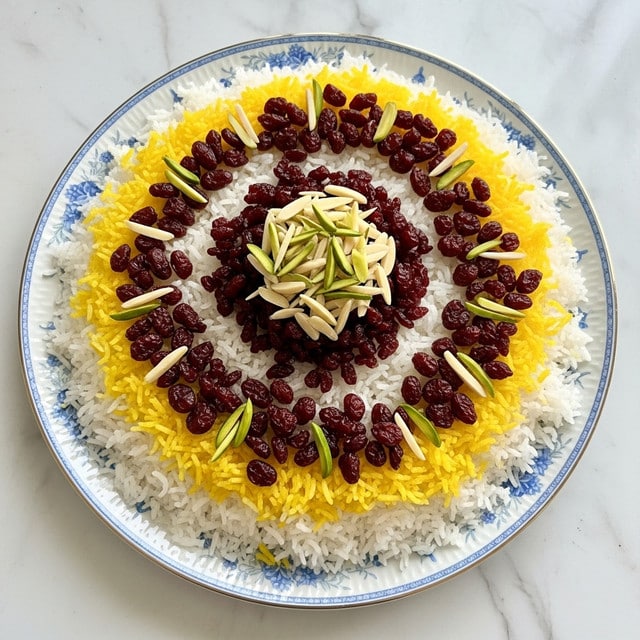
Zereshk Polo is a traditional Persian dish featuring fragrant basmati rice mixed with tangy barberries and aromatic saffron. This vibrant and flavorful rice pairs beautifully with stews or grilled meats, making it a perfect centerpiece for any meal.
Ingredients
- 2 cups white basmati rice
- ¾ cup dried barberries
- 1.5oz / 45g white sugar
- ½ teaspoon ground saffron or a good pinch of saffron threads
- 6-8 cups water
- 2 teaspoons salt
- 2-3 tablespoons extra virgin olive oil
- Garnish: slivered pistachios and almonds
Instructions
- Step 1: Rinse the basmati rice several times under running water until the water runs clear to remove excess starch.
- Step 2: Fill the pot with 6-8 cups of clean water and add the salt. Bring to a simmer over medium-high heat and parboil the rice for 10–12 minutes until al dente. Skim off any foam that appears.
- Step 3: While the rice cooks, grind the saffron threads into powder using a mortar and pestle. Place about ½ teaspoon of the ground saffron in a small jar and pour a few tablespoons of boiling water over it to infuse.
- Step 4: Drain the rice through a fine sieve and rinse gently with cold water to stop cooking.
- Step 5: Take a few ladles of rice in a bowl, mix with some saffron water until the rice turns yellow to prepare the saffron tahdig.
- Step 6: Heat 2 tablespoons of olive oil in the non-stick pot. Spread the saffron rice evenly at the bottom to create a golden crust.
- Step 7: Add the remaining plain rice on top. Use the handle of a wooden spoon to poke holes through the rice down to the bottom of the pot, creating air pockets.
- Step 8: Wrap the pot lid with a clean kitchen towel, add a splash of water inside the pot, cover with the lid, and cook on the lowest heat for 45 minutes to steam the rice fully.
- Step 9: Meanwhile, rinse the barberries and add them to a pan with 1 tablespoon of olive oil, sugar, and a drizzle of saffron water. Simmer on low heat for 3-5 minutes, stirring frequently to soften and plump the barberries. Add a splash of water if needed to prevent burning.
- Step 10: When the rice is ready, carefully invert the pot onto a serving platter to reveal the crisp saffron tahdig at the bottom.
- Step 11: Remove the tahdig, then sprinkle the cooked barberries over the rice. Garnish with slivered pistachios and almonds before serving.
- Step 12: Enjoy your Zereshk Polo alongside Persian chickpea stew, saffron chicken, or a fresh Shirazi salad.
Tips & Variations
- Soaking the rice for 30 minutes before cooking can improve texture and fluffiness.
- Use genuine Persian saffron threads for the best aroma and color; grind and infuse just before cooking.
- Substitute barberries with dried cranberries for a similar tart flavor if unavailable.
- Add a pinch of turmeric to the plain rice for extra color and flavor contrast.
- For extra crunch, allow the tahdig to cook an additional 5-10 minutes on low heat before steaming ends.
Storage
Store leftover Zereshk Polo in an airtight container in the refrigerator for up to 3 days. Reheat gently in the microwave or steam on the stove with a splash of water to restore moisture. The tahdig is best enjoyed fresh but can be crisped again in a pan over low heat before serving.
How to Serve
Serve this delicious recipe with your favorite sides.
FAQs
Can I use other types of rice for Zereshk Polo?
While basmati rice is traditional for its fragrance and long grains, you can substitute with other long-grain rice varieties. Avoid sticky or short-grain rices as they won’t provide the distinct fluffy texture needed.
How do I prevent the barberries from burning?
Barberries are small and delicate, so it’s important to simmer them gently over low heat and stir frequently. Adding a splash of water during cooking helps keep them moist and prevents burning or sticking to the pan.
Print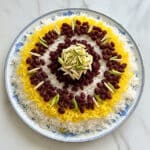
Zereshk Polo – Persian Barberry Rice with Saffron Tahdig Recipe
- Total Time: 1 hour 8 minutes
- Yield: 6 servings 1x
Description
Zereshk Polo is a traditional Persian dish featuring fragrant basmati rice infused with saffron and topped with tangy, sweet barberries. This authentic recipe includes a golden saffron tahdig (crispy rice crust) and garnishes of slivered pistachios and almonds, delivering a perfect balance of flavors and textures. Ideal to serve with Persian chickpea or saffron chicken stews, this dish offers a delicious and elegant taste of Persian cuisine.
Ingredients
Rice and Tahdig
- 2 cups white basmati rice
- ½ teaspoon ground saffron or a good pinch of saffron threads
- 6–8 cups water
- 2 teaspoons salt
- 2–3 tablespoons extra virgin olive oil
Barberries Topping
- ¾ cup dried barberries
- 1.5 oz (45 g) white sugar
- 1 tablespoon extra virgin olive oil
- A drizzle of saffron water (from infused saffron threads)
Garnish
- Slivered pistachios
- Slivered almonds
Instructions
- Wash the Rice: Add the basmati rice to a non-stick cooking pot and wash several times under running cold water (about 4-5 times) until the water runs clear, removing excess starch for fluffier rice.
- Parboil the Rice: Fill the pot with 6-8 cups of clean water and add 2 teaspoons of salt. Bring to a simmer over medium-high heat and cook the rice for 10-12 minutes until it is partially cooked but still al dente. Skim off any white foam that appears on the surface.
- Prepare Saffron Water: While the rice boils, grind saffron threads into powder using a mortar and pestle. Add about ½ teaspoon of ground saffron to a small jar and pour a few tablespoons of boiling water over it. Let it infuse to create a fragrant saffron water.
- Drain and Rinse Rice: When rice is al dente, drain it through a fine mesh sieve and rinse gently under cold running water, ensuring water pressure is low to avoid breaking the grains.
- Prepare Saffron Tahdig Layer: Place a few ladles of parboiled rice into a bowl, drizzle with some saffron water, and mix until the rice turns a vibrant yellow color.
- Form the Tahdig: Add 2 tablespoons of olive oil to the bottom of the non-stick pot. Spread the saffron-infused rice evenly as the bottom layer of the pot.
- Add Remaining Rice: Pour in the rest of the parboiled rice on top, then use the handle of a wooden spoon or tablespoon to poke holes through the rice down to the bottom of the pot, creating air pockets for steam circulation.
- Steam the Rice: Wrap the pot’s lid with a clean kitchen towel, add a splash of water inside the pot, and cover tightly. Cook on the lowest heat setting for 45 minutes to allow the tahdig to crisp and finish cooking the rice through.
- Prepare Barberries: Rinse the dried barberries under cold water using a colander. In a pan, heat 1 tablespoon of olive oil, then add the barberries, sugar, and a drizzle of saffron water. Simmer on low heat for 3-5 minutes, stirring continuously to soften the barberries and melt the sugar. Add water if necessary to prevent burning.
- Flip and Serve: When the rice is ready, remove the lid and place a large serving dish over the pot. Invert the pot to release the rice and tahdig onto the dish. Carefully lift the pot to reveal the golden crisp tahdig layer.
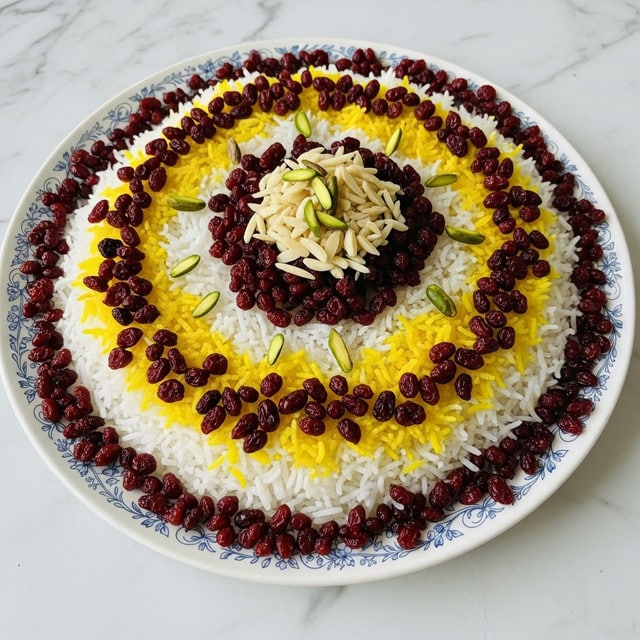
- Garnish: Remove the tahdig and sprinkle cooked barberries over the top of the rice. Garnish generously with slivered pistachios and almonds for added texture and flavor.
- Serve: Serve Zereshk Polo warm alongside Persian chickpea stew, saffron chicken stew, or Shirazi salad for a classic Persian meal experience.
Notes
- Use high-quality basmati rice for the best texture and fragrance.
- Patience is key when cooking tahdig; keep the heat low to avoid burning the crisp layer.
- If barberries are not available, dried cranberries can be a substitute, though flavor will differ.
- Saffron is expensive but essential for authentic flavor and color; steep it properly in hot water to maximize its aroma.
- The kitchen towel wrapped around the lid helps absorb steam and keeps rice dry, perfecting the tahdig texture.
- This dish pairs wonderfully with chicken or vegetarian Persian stews or simply with fresh salad.
- Prep Time: 15 minutes
- Cook Time: 53 minutes
- Category: Main Course
- Method: Stovetop
- Cuisine: Persian
Keywords: Zereshk Polo, Persian rice, Barberry rice, Saffron rice, Tahdig, Persian cuisine, Middle Eastern rice dish