Description
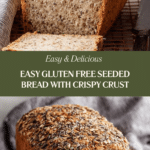
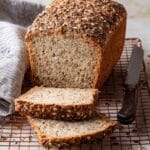
This gluten free seeded loaf offers a soft and chewy crumb with a deliciously crisp crust, bursting with flavor thanks to a generous mix of seeds. Perfect for those avoiding gluten, this bread requires only one rise, making it an accessible and rewarding baking project. The recipe uses a blend of gluten free flours and psyllium husk to achieve a satisfying texture and hearty taste.
Ingredients
Scale
Yeast Mixture
- 12 g (1 tbsp) active dried yeast
- 20 g (2 tbsp) superfine/caster sugar
- 240 g (1 cup) warm water
Psyllium Gel
- 30 g (⅓ cup + ½ tbsp) psyllium husk (rough husk form)
- 345 g (1 ⅓ cups + 1 ½ tbsp) water
Dry Ingredients
- 195 g (1 ⅓ cups) buckwheat flour
- 150 g (1 ⅓ cups) tapioca starch
- 135 g (1 cup) millet flour
- 10 g (2 tsp) table or sea salt
Other Ingredients
- 15 g (2 ½ tsp) apple cider vinegar
- 150 g (1 cup) mixed seeds (linseed, sunflower seeds, pumpkin seeds), divided
- 1 UK medium / US large egg, whisked, for egg wash (optional, omit for vegan bread)
Instructions
- Prepare loaf tin: Line a 2lb/900g loaf tin (approximately 21cm long, 11cm wide, 7cm high) with baking or greaseproof paper to facilitate easy removal of the baked loaf.
- Activate yeast: In a small bowl, combine yeast, sugar, and 240g warm water. Allow it to sit for 10–15 minutes until frothy, indicating the yeast is active.
- Make psyllium gel: In a separate bowl, mix psyllium husk with 345g water. Let sit for 15–30 seconds until a gel forms.
- Combine dry ingredients: In a large mixing bowl, whisk together buckwheat flour, tapioca starch, millet flour, and salt evenly.
- Mix dough: Add the yeast mixture, psyllium gel, and apple cider vinegar to the dry ingredients. Knead by hand or with a stand mixer fitted with a dough hook until the dough is smooth and starts to pull away from the bowl, about 5–10 minutes.
- Add seeds to dough: Incorporate about 120g (¾ cup) of the mixed seeds into the dough, kneading until evenly distributed.
- Shape dough and proof: Lightly oil a surface, knead dough gently into a log to fit the loaf tin, then transfer it seam side down into the tin. Press gently to even out the top. Cover loosely with cling film and let rise in a warm place for 1 hour 15 minutes to 1 hour 30 minutes until approximately doubled in volume. (Optionally, for a double rise, allow dough to rise first in a lightly oiled bowl until doubled, then shape and proceed.)
- Preheat oven and prepare steaming: Place a baking tray on the bottom rack and preheat oven to 480°F (250°C) with the rack adjusted to the middle position.
- Apply egg wash and seeds: Lightly brush the risen dough with whisked egg for a glossy finish or water if vegan, optionally adding sugar or maple syrup to help seeds stick. Sprinkle remaining mixed seeds evenly on top.
- Bake with steam: Place the loaf on the middle rack, pour boiling water into the bottom tray to create steam, optionally spray the loaf with water 4-5 times, and close the oven door. Bake at 480°F (250°C) for 15 minutes without opening the door.
- Continue baking: Remove the water tray, reduce oven temperature to 430°F (220°C), and bake for another 60–70 minutes without steam. If browning too rapidly, cover the loaf loosely with aluminum foil, shiny side up.
- Optional drying step: To reduce moisture inside, remove loaf from tin and bake directly on oven rack for the last 15 minutes, covering top with foil to avoid over-browning.
- Cool bread: Immediately transfer the baked bread from the tin to a wire rack and allow to cool completely before slicing.
- Storage: Wrap the cooled bread in a tea towel and keep in a cool, dry place for 3–4 days for best freshness.
Notes
- Active dried yeast substitution: Instant yeast can replace active dried yeast; add it directly to dry ingredients without activating. Use all water with dry ingredients and proceed with psyllium gel and apple cider vinegar.
- Vinegar substitution: Apple cider vinegar is recommended, though other vinegars may be used with potential subtle flavor differences.
- Psyllium husk: Do not substitute with other ingredients. If using powder form psyllium husk, reduce quantity to 75-85% of the weight listed.
- Flour substitutions: Buckwheat flour can be replaced by white teff flour, sorghum flour, or oat flour; tapioca starch can be swapped with corn starch, potato starch, or arrowroot starch; millet flour can be replaced with brown rice flour. Always measure substitutions by weight for accuracy.
- Baking tips: Avoid opening the oven door during initial steam baking to maintain necessary humidity. Cover the bread with foil if browning too fast.
- Vegan option: Omit egg wash and use water wash with added sugar or maple syrup for seed adhesion.
- Prep Time: 30 minutes
- Cook Time: 1 hour 15 minutes
- Category: Bread
- Method: Baking
- Cuisine: Gluten Free
Keywords: gluten free bread, seeded bread, buckwheat flour bread, gluten free loaf, psyllium husk bread, mixed seed bread