
Honey Oat Sourdough Bread Recipe
Introduction
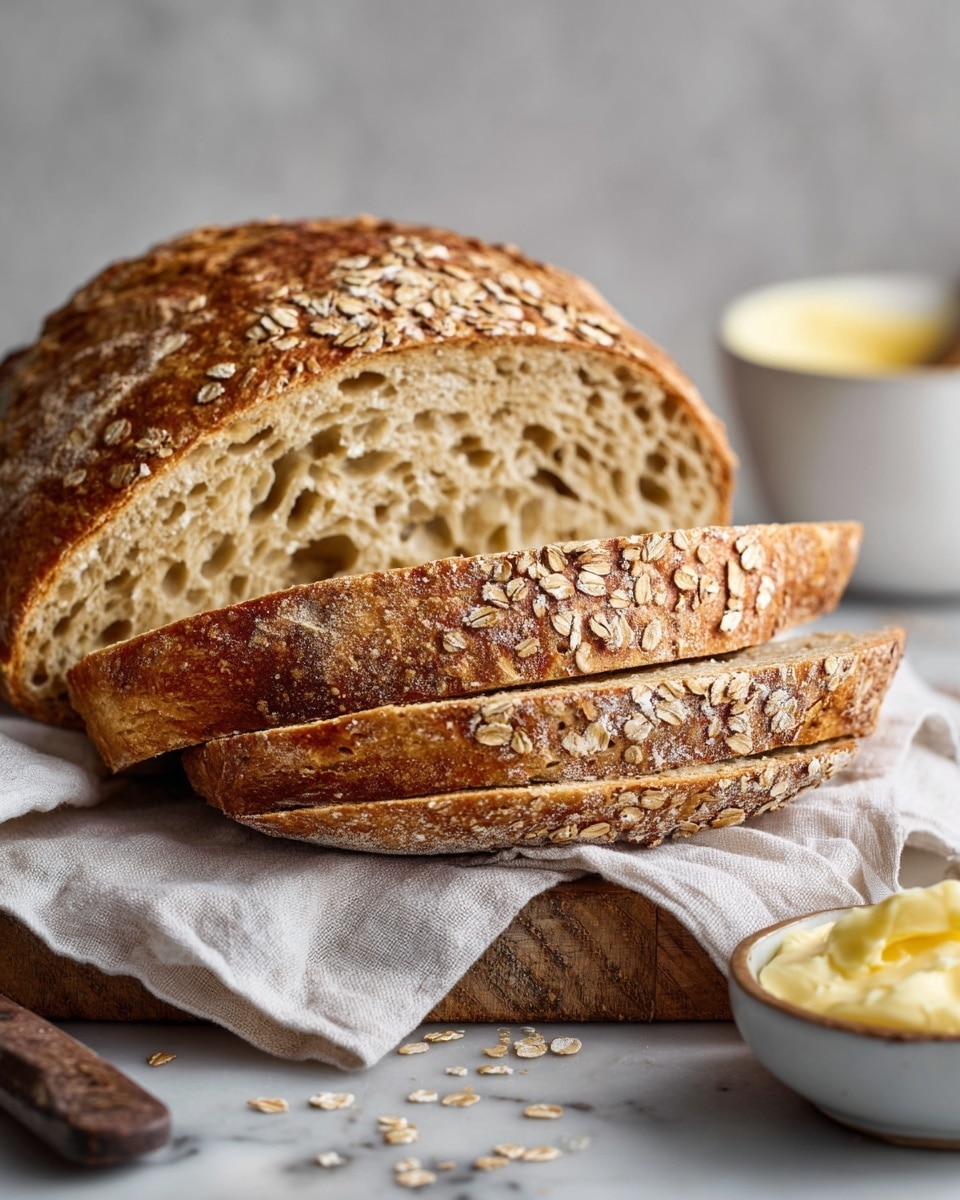
This Honey Oat Sourdough Bread combines the tangy depth of classic sourdough with the natural sweetness of honey and the hearty texture of rolled oats. It’s a rewarding bake that yields a crusty loaf with a soft, flavorful crumb perfect for breakfast or sandwiches.
Ingredients
- 100 grams sourdough starter (1/2 cup)
- 100 grams honey (scant 1/3 cup)
- 330 grams water (1 1/4 cups + 2 tablespoons), room temperature
- 90 grams rolled oats, plus more for rolling (1 cup)
- 500 grams bread flour (3 1/2 cups)
- 12 grams salt (2 teaspoons)
Instructions
- Make the dough: In a large mixing bowl, combine the active sourdough starter, honey, and room temperature filtered water. Mix with a dough whisk or your hand until it becomes a golden, milky liquid.
- Add dry ingredients: To the wet mixture, add the bread flour, rolled oats, and salt. Mix until all flour is incorporated. The dough will be wet and sticky, not a uniform ball.
- Rest the dough: Cover the bowl with plastic wrap or a reusable shower cap and let it rest for at least 30 minutes.
- Perform stretch and folds: With slightly wet fingers, lift a section of dough and stretch it over the top, then fold it back onto itself. Rotate the bowl about a quarter turn and repeat until you’ve gone all the way around (4-6 times). The dough should start to look smoother.
- Rest again: Cover the dough and let it rest for another 30 minutes. Repeat stretch and folds for a total of 4 rounds, with 30-minute rests between each.
- Bulk fermentation: After the last round, cover the dough and leave it to ferment on the counter for 7-9 more hours at around 70°F. Look for signs like a 75% increase in size, a domed top, bubbles, lightness, and a jiggly feel.
- Pre-shape: With wet fingers, gently loosen the dough from the bowl and let it drop onto the counter. Do another stretch and fold around the dough to shape it. Turn it seam side down and cover with a bowl to rest for 30 minutes.
- Prepare proofing basket and oat topping: Line a banneton or small bowl with a tea towel. Pour rolled oats onto a clean tea towel and spread in a single layer. Set aside.
- Final shape: Flip dough seam side up. Fold each side toward the center, then fold the top down. Flip seam side down again, cup your hands around the dough, and turn it while gently pulling to tighten the shape. Damp the dough’s top and roll it onto the oats to coat evenly.
- Proof: Place the oat-coated dough into the basket seam side down. Cover with plastic wrap and refrigerate for 8–72 hours to cold-proof.
- Scoring preparation: Thirty minutes before baking, transfer the dough to the freezer to firm up. Simultaneously, preheat your oven to 500°F with a Dutch oven inside for at least 30 minutes.
- Score the loaf: Place a parchment paper on your workspace, invert the dough from the basket onto it (oat side up). Using a sharp knife or lame, score a crescent moon shape across the top.
- Bake: Using the parchment, lift and place the dough into the hot Dutch oven. Cover and bake at 450°F for 30 minutes. Remove lid and bake uncovered at 425°F for another 10-15 minutes until golden and internal temperature reaches at least 205°F. Cover with foil if browning too quickly.
- Cool: Remove bread with parchment from the Dutch oven and place on a wire rack. Allow to cool for at least one hour before slicing to avoid a gummy texture.
- Enjoy: Slice and serve with butter and extra honey for the perfect treat.
Tips & Variations
- Use a reusable shower cap instead of plastic wrap for a more eco-friendly cover during fermentation.
- Adjust the cold-proof time based on your schedule; shorter for a milder flavor, longer for deeper complexity—just don’t exceed 72 hours.
- Rolled oats on the dough help prevent sticking in the proofing basket and add delightful texture to the crust.
- If you don’t have a Dutch oven, bake the loaf on a preheated baking stone with a pan of water for steam.
Storage
Store the bread at room temperature in a bread bag or wrapped in a clean towel for up to 3 days. For longer storage, slice and freeze the bread in a resealable bag for up to 3 months. To reheat, toast slices directly or warm the whole loaf wrapped in foil at 350°F for 10-15 minutes.
How to Serve
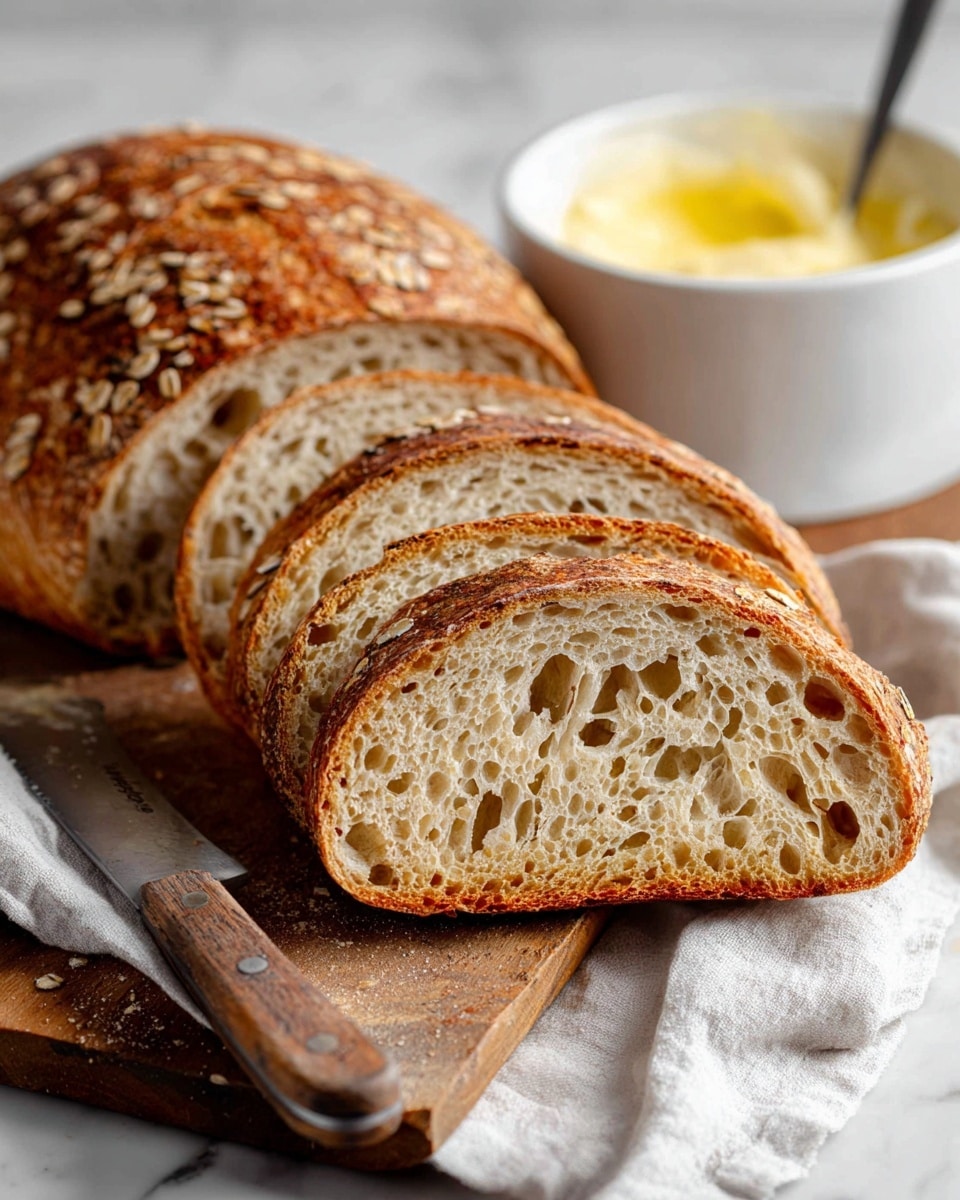
Serve this delicious recipe with your favorite sides.
FAQs
Can I use all-purpose flour instead of bread flour?
Yes, you can substitute all-purpose flour, but the texture will be slightly less chewy and the loaf might rise a bit less due to lower gluten content.
How do I know when my sourdough starter is active enough for this recipe?
Your starter should be bubbly, have doubled in size within 4-6 hours of feeding, and pass the float test—meaning a spoonful floats in water. This indicates strong fermentation power.
Print
Honey Oat Sourdough Bread Recipe
- Total Time: 9 hours 40 minutes
- Yield: 1 loaf (about 1.5 pounds) 1x
- Diet: Vegetarian
Description
This Honey Oat Sourdough Bread recipe combines the natural tang of sourdough with the subtle sweetness of honey and the hearty texture of rolled oats. It requires a slow fermentation process for deep flavor development and results in a beautifully crusty loaf with a soft, fluffy interior. Perfect for breakfast or sandwiches, this bread offers a wonderful balance of wholesome ingredients and artisanal bread-making techniques.
Ingredients
Wet Ingredients
- 100 grams sourdough starter (1/2 cup), active
- 100 grams honey (scant 1/3 cup)
- 330 grams filtered water (1 1/4 cups + 2 tablespoons), room temperature
Dry Ingredients
- 90 grams rolled oats (1 cup), plus more for rolling and topping
- 500 grams bread flour (3 1/2 cups)
- 12 grams salt (2 teaspoons)
Instructions
- Make the Dough: In a large bowl, combine active sourdough starter, honey, and room temperature filtered water. Mix thoroughly with a dough whisk or by hand until you achieve a golden, milky liquid texture. Add bread flour, rolled oats, and salt to the wet mixture. Mix until all flour is incorporated; the dough will be wet and sticky, not a uniform ball. Cover the bowl with plastic wrap or a reusable shower cap and let the dough rest for at least 30 minutes.
- Perform Stretch and Folds: With slightly wet fingers, pull a portion of dough up and fold it over the rest of the dough inside the bowl. Rotate the bowl a quarter turn clockwise and repeat. Perform this stretch and fold sequence 4-6 times per round, until the dough becomes smoother. Cover and rest the dough for 30 minutes. Repeat this process a total of 4 rounds, allowing at least 30 minutes rest between each. After the final round, cover and allow the dough to bulk ferment at room temperature (around 70°F) for 7-9 hours until it rises about 75%, looks light, jiggles when shaken, pulls away easily from the bowl, shows bubbles, and passes the windowpane test.
- Pre-shape the Dough: Using wet fingers, gently release the dough from the bowl avoiding deflating it. Transfer the dough onto a lightly floured surface. Perform another full round of stretch and folds until the dough is evenly shaped. Turn the dough seam side down on the counter. Cover with a bowl and rest for 30 minutes.
- Prepare Proofing Basket and Oat Topping: Line a banneton or small bowl with a tea towel. Spread a clean tea towel with a single layer of rolled oats for coating the dough later. No extra flour is needed since oats prevent sticking.
- Final Shape: After resting, flip the dough so the seam side is up. Fold each side (bottom, right, left, and top) tightly toward the center, creating surface tension. Flip dough seam side down and gently cup your hands around it, rotating a quarter turn and lightly pulling dough toward you repeatedly to create a tight, round shape without tearing. Lightly dampen the top with water and roll dough onto the oat-covered tea towel to coat evenly. Place dough oat side down in the proofing basket and cover with plastic wrap or shower cap.
- Cold Proof: Refrigerate the dough for 8 to 72 hours to slow fermentation and deepen flavor. Avoid proofing too long to prevent over-fermentation.
- Prepare for Baking: Thirty minutes before baking, transfer dough to the freezer for firmness to ease scoring. Meanwhile, preheat your oven to 500°F with a Dutch oven inside for at least 30 minutes.
- Score the Dough: Place a piece of parchment paper on the workstation, flip the proofing basket upside down so dough falls gently onto the paper oat side up. Using a lame or sharp knife, score a crescent moon shape on the dough to allow for oven spring.
- Bake: Using parchment paper edges, transfer the dough into the preheated Dutch oven and cover with the lid. Lower heat to 450°F and bake covered for 30 minutes. Remove the lid and continue baking for 10-15 minutes uncovered at 425°F, or until crust is golden brown and internal temperature reaches at least 205°F. If the crust browns too fast, tent with foil.
- Cool and Serve: Remove the Dutch oven from the oven, lift the bread out using parchment paper, and place on a wire rack. Allow the bread to cool completely for at least 1 hour before slicing to prevent gummy texture. Serve with butter and a drizzle of honey for the best flavor experience.
Notes
- The bulk fermentation time varies greatly depending on ambient temperature, so watch for dough signs rather than relying strictly on the clock.
- When shaping, handle dough gently to preserve the protective gas bubbles for a light, airy crumb.
- Rolling the dough in oats adds texture and prevents sticking; no additional flour is necessary for the proofing basket.
- Cold proofing can be adjusted between 8 and 72 hours for flavor development, but longer proofing risks over-fermentation.
- Scoring the dough is vital to control oven spring and create a beautiful crust.
- Allowing the bread to cool fully ensures proper crumb setting and avoids gummy slices.
- Prep Time: 1 hour 30 minutes
- Cook Time: 45 minutes
- Category: Bread
- Method: Baking
- Cuisine: American
Keywords: honey oat sourdough, sourdough bread, homemade bread, oat bread, sourdough starter, artisanal bread