
Caramelized Onion and Gouda Sourdough Bread Recipe
Introduction
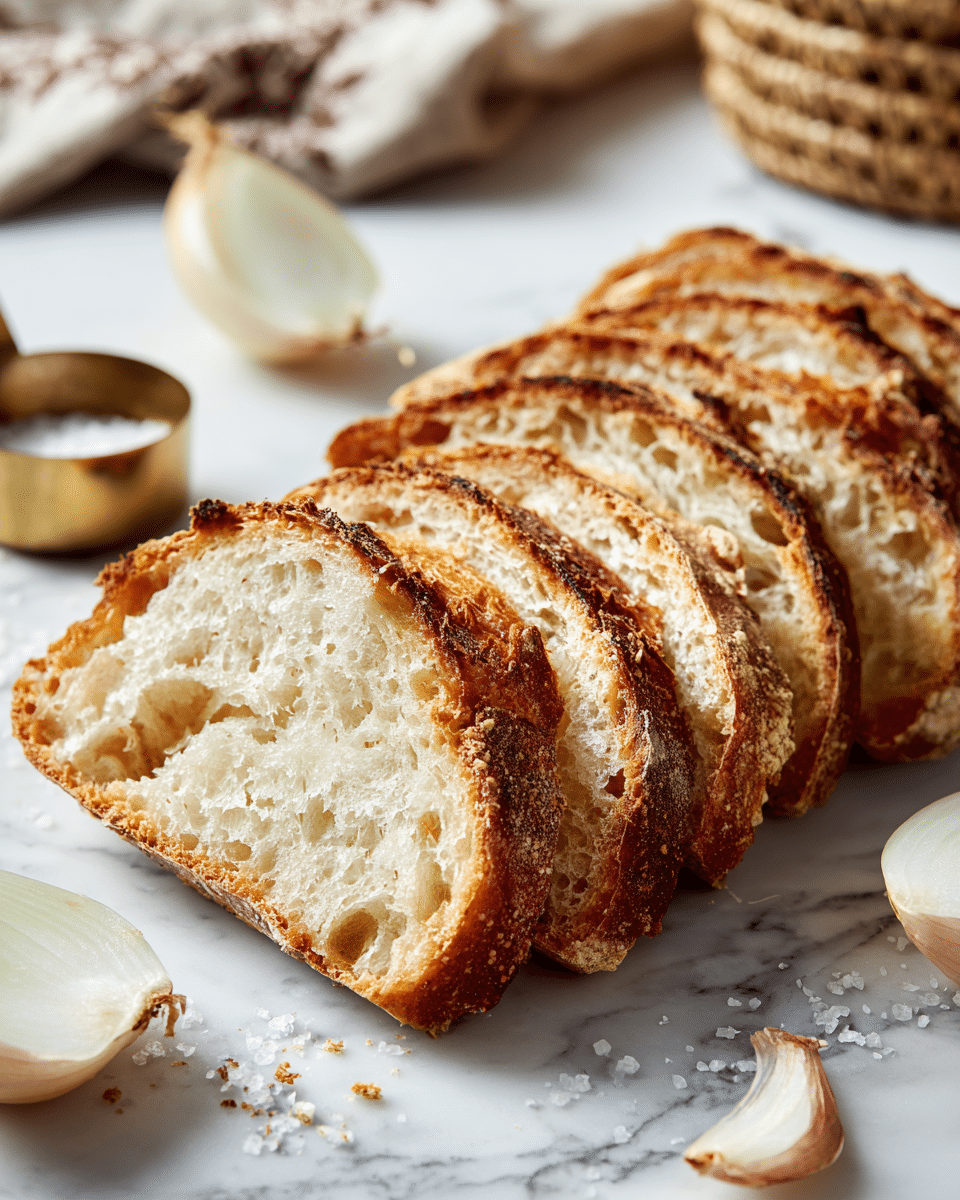
This Caramelized Onion and Gouda Sourdough Bread is a delightful twist on classic sourdough, featuring sweet, tender onions and rich, melty Gouda cheese. Perfect as a savory snack or accompaniment, this loaf offers deep flavor and a satisfying crust that home bakers will love.
Ingredients
- 350 g water (room temperature)
- 100 g sourdough starter (active)
- 500 g bread flour
- 12 g sea salt (coarse)
- 1 yellow onion (medium-large)
- 2 tablespoons butter (unsalted)
- 80 g Gouda (shredded)
Instructions
- Step 1: In a large bowl, combine 350 g of room temperature water with 100 g of active sourdough starter and whisk until mostly combined.
- Step 2: Add 500 g bread flour on top of the mixture and sprinkle 12 g sea salt over the flour.
- Step 3: Mix using a dough whisk, spatula, or spoon until a shaggy dough forms, then knead by hand until all dry bits are incorporated. Cover and let rest for 60 minutes.
- Step 4: Perform a stretch and fold: with damp hands, pull a section of dough and fold it over itself. Rotate the bowl 90 degrees and repeat three more times. Cover and rest for 60 minutes.
- Step 5: Repeat the stretch and fold once more, then rest the dough for another 60 minutes.
- Step 6: Slice the onion and cook in a heavy skillet with 2 tablespoons unsalted butter over medium-low heat, stirring often, until caramelized and fragrant. Cool in the fridge before use.
- Step 7: On a lightly floured surface, press the dough into a rectangle. Spread half of the caramelized onions and half the shredded Gouda over the top two-thirds of the dough.
- Step 8: Fold the bottom third of the dough up, then spread half of the remaining onions and cheese on it. Fold in the bottom right corner about one third the dough’s width, then repeat on the left. Press to seal.
- Step 9: Spread the remaining onions and cheese on the top portion, then fold down to create a tidy package. Lift dough with a bench scraper and place into a large bowl. Cover and bulk ferment for 2 hours.
- Step 10: After bulk ferment, transfer dough to a floured surface and gently press into a rectangle. Fold the bottom third up, then fold in both sides about one third each. Roll from bottom to top into a log. Cover and rest 30 minutes.
- Step 11: Flip the dough, clasp ends toward center, press to hold together, rotate 90 degrees and repeat to form a batard shape. Dust with rice flour and place seam side up into a banneton.
- Step 12: Prove the dough for 2-3 hours in a warm place, then cover and refrigerate to cold retard for up to 3 days. Baking immediately after proving is possible but flavor improves after cold rest.
- Step 13: Preheat oven to 450°F with a Dutch oven or baking vessel inside.
- Step 14: Invert the banneton dough onto parchment paper. Score the dough with a lame or sharp knife.
- Step 15: Transfer dough into the hot Dutch oven using the parchment as a sling. Bake covered at 450°F for 30 minutes, then uncovered for 10-15 minutes until crust is browned and internal temperature reaches 205–210°F.
- Step 16: Remove bread from Dutch oven and cool completely on a wire rack, ideally for at least 2 hours before slicing.
Tips & Variations
- Use sweet yellow onions for a milder, sweeter caramelized flavor; red onions also work for a sharper taste.
- Substitute Gouda with other melting cheeses like Gruyère or Fontina for a different cheesy note.
- For a more rustic crust, dust the dough liberally with rice flour before placing in the banneton.
- Allowing the dough to cold retard enhances flavors and improves dough handling.
Storage
Store any leftover bread wrapped in a clean kitchen towel or paper bag at room temperature for up to 3 days. To refresh the crust, reheat in a 350°F oven for 5-10 minutes. For longer storage, slice and freeze the bread, then toast slices directly from the freezer.
How to Serve
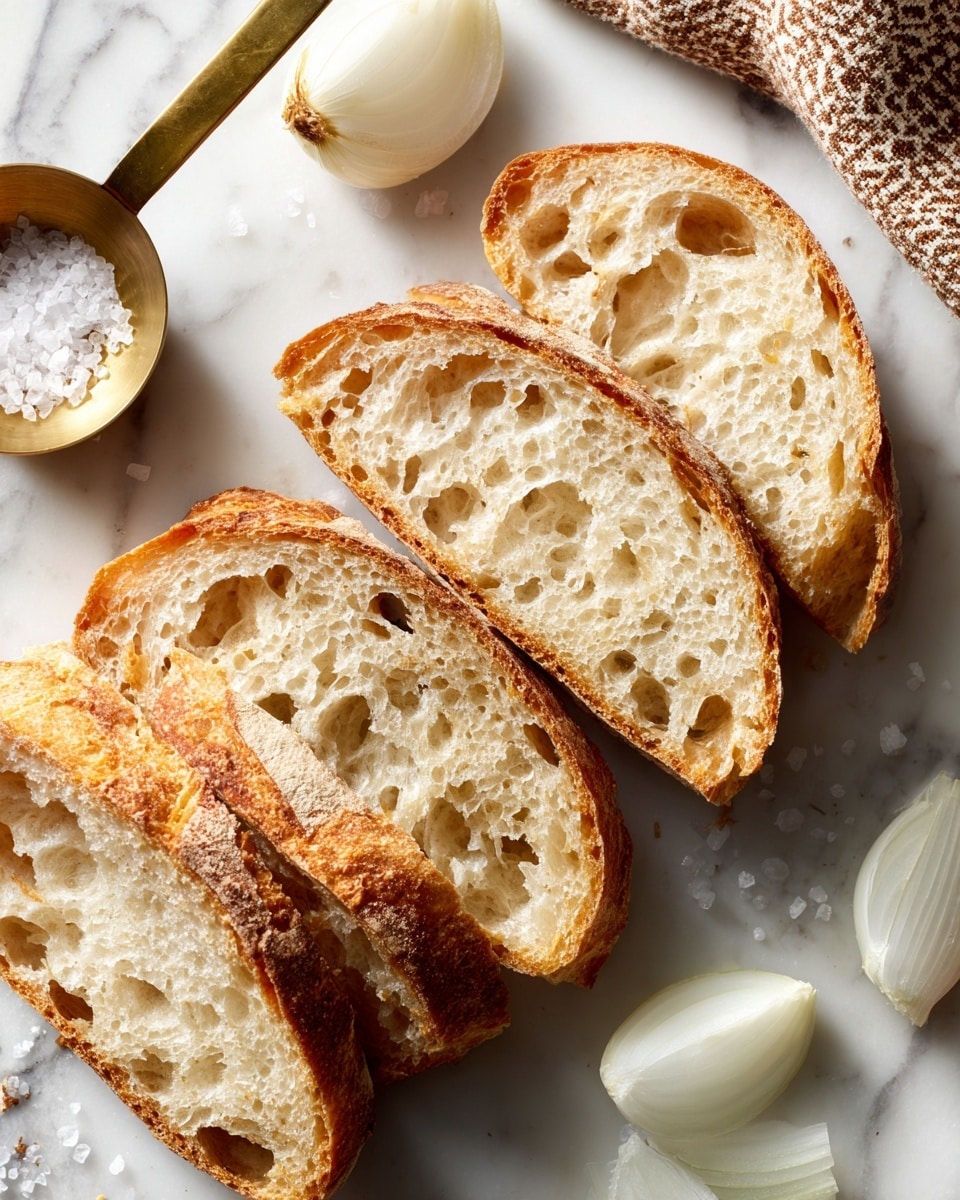
Serve this delicious recipe with your favorite sides.
FAQs
Can I use a different type of cheese?
Yes, this recipe works well with other semi-soft cheeses that melt nicely, such as Gruyère, Fontina, or even sharp cheddar. Choose a cheese that complements the sweetness of the caramelized onions.
Do I have to cold retard the dough?
No, cold retardation is optional. You can bake the bread immediately after proving, but resting it in the fridge for up to 3 days helps develop deeper flavor and improves texture.
Print
Caramelized Onion and Gouda Sourdough Bread Recipe
- Total Time: 4 hours 15 minutes plus up to 3 days cold retardation
- Yield: 1 large artisan sourdough loaf 1x
Description
This Caramelized Onion and Gouda Sourdough Bread combines the deep, sweet flavors of slowly caramelized onions with the creamy richness of shredded Gouda cheese, all wrapped in a crisp, tangy sourdough crust. The bread is carefully laminated to incorporate the onion and cheese, then bulk fermented and cold retarded for enhanced flavor and texture. Finally, it’s baked to perfection in a Dutch oven, resulting in a beautifully browned crust and a soft, flavorful crumb. Perfect for artisan sandwich making or enjoying on its own.
Ingredients
Dough:
- 350 g water (room temperature)
- 100 g active sourdough starter
- 500 g bread flour (unbleached)
- 12 g coarse sea salt
Filling and Topping:
- 1 medium-large yellow sweet onion
- 2 tablespoons unsalted butter
- 80 g shredded Gouda cheese
Instructions
- Make The Dough: In a large bowl, combine 350g of room temperature water with 100g of active sourdough starter and whisk until mostly combined. Add 500g of unbleached bread flour on top and sprinkle 12g of coarse sea salt over the flour. Mix with a Danish dough whisk, spatula, or spoon until a shaggy dough forms. Knead with hands until all dry bits disappear. Cover the bowl and let rest for 60 minutes.
- Stretch And Fold: With damp hands, gently pull one side of the dough to stretch it, fold it over itself, then rotate the bowl 90 degrees and repeat three more times to complete one set of stretch and folds. Cover the bowl and rest the dough for 60 minutes. Repeat this stretch and fold process once more, then rest another 60 minutes.
- Caramelize Onions: Slice one medium-large sweet onion thinly and melt 2 tablespoons of unsalted butter in a heavy skillet over medium-low heat. Add the onions and cook while stirring often until the onions turn golden brown, caramelize, and become fragrant. Allow the caramelized onions to cool completely, then refrigerate until needed for lamination.
- Laminate + Bulk Ferment: Lightly flour a work surface and turn the dough out. Carefully press and stretch it into a large rectangle. If the dough resists stretching, let it rest for a few minutes and try again. Spread half of the caramelized onions (approximately 120g) evenly over the top two-thirds of the dough, then cover with half of the shredded Gouda (approximately 80g). Fold the bottom third of the dough up, spread half of the remaining onions and cheese on the folded flap. Fold in the bottom right corner about a third of the dough’s width, then fold in the left corner similarly, pressing to seal the dough. Spread remaining onions and cheese over the top section and fold down to form a neat package. Lift the dough with a bench scraper and place it into a large bowl, cover, and let bulk ferment for 2 hours.
- Pre-Shape and Shape: After bulk fermentation, ensure the dough has risen with a smooth surface and visible bubbles. Turn the dough out onto a lightly floured surface and press into a large rectangle. Fold the bottom third up like a letter, fold in the right and left thirds towards the center, then roll from bottom to top creating a tight log. Cover with a clean kitchen towel and let rest for 30 minutes. Next, flip the dough over, clasp and pinch the ends toward the center to secure the shape, rotate 90 degrees and repeat clasping to shape into a batard. Press the seams to seal. Dust the shaped dough with rice flour and place seam side up into a banneton.
- Prove + Cold Retard: Allow the dough to prove in the banneton for 2 to 3 hours at room temperature. Once proved, cover the dough and refrigerate it for cold retardation for up to 3 days to develop flavor. It can be baked immediately after proving if desired, but flavor improves after resting.
- Bake: Preheat your oven to 450°F (232°C) with a Dutch oven or cloche inside. When ready to bake, invert the banneton onto parchment paper. Score the dough with a lame or sharp blade. Carefully remove the hot Dutch oven and use the parchment paper to transfer the dough into it. Cover and bake at 450°F for 30 minutes, then uncover and bake another 10 to 15 minutes until the crust is deeply browned and the internal temperature reaches 205–210°F (96–99°C).
- Cool: Remove the bread from the Dutch oven and transfer to a wire cooling rack. Let cool completely for at least 2 hours before slicing to ensure optimal crumb texture.
Notes
- Ensure the sourdough starter is active and bubbly before beginning for best results.
- Using a banneton with rice flour helps prevent sticking and creates an attractive crust.
- Caramelizing onions low and slow prevents burning and brings out natural sweetness.
- Cold retardation in the fridge enhances flavor complexity and makes the dough easier to score.
- Allowing the bread to cool completely before slicing improves crumb structure and prevents gumminess.
- Internal bread temperature between 205°F and 210°F indicates it is fully baked.
- Prep Time: 3 hours 30 minutes
- Cook Time: 45 minutes
- Category: Bread
- Method: Baking
- Cuisine: European
Keywords: sourdough bread, caramelized onions, gouda cheese, artisan bread, laminated dough, homemade bread, Dutch oven baking